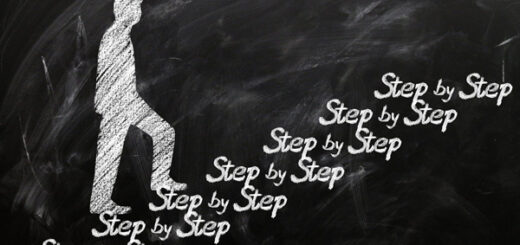
How to Keep Momentum in Motivation: Bridging the Gap Between Spark and Sustained Flame
by admin · Published · Updated
Introduction: The Momentum Paradox
You know the feeling. A brilliant idea strikes, a goal is set, and you launch yourself forward with electrifying energy. The first week is a blaze of progress. Then, life whispers its distractions. The initial excitement, that brilliant spark, begins to flicker. The gym bag stays in the trunk, the novel’s document grows cold, and the language app sends lonely notifications.
This isn’t a personal failing; it’s a psychological reality. We fundamentally misunderstand motivation. We mistake the initial spark—the surge of inspiration, the New Year’s resolution high—for the fuel itself. When that emotional high inevitably dips, we assume our motivation has vanished.
True, sustainable progress isn’t powered by that fleeting spark. It’s powered by momentum. Think of motivation momentum as a self-reinforcing cycle: Action → Result (or evidence) → Increased Confidence & Motivation → Further Action. The spark ignites the engine, but momentum is what keeps it moving forward through friction. The core problem we must solve is how to build and protect that momentum when the spark fades. This is the bridge between starting and succeeding.
The Three Pillars of Sustained Momentum
To build a bridge that lasts, we need strong supports. These three pillars form the psychological and structural foundation for lasting momentum.
Pillar 1: The Action-Confidence Loop
Forget feeling motivated to act. Behavioral science shows us the reverse is more powerful: action creates motivation. This is rooted in Albert Bandura’s concept of self-efficacy—your belief in your ability to succeed in specific situations.
Every time you complete a small, defined action, you gather concrete evidence for your brain: “I can do this.” This evidence builds your self-efficacy. A stronger belief in your capability fuels the motivation to take the next action, creating a positive feedback loop. The action doesn’t need to be huge; it just needs to be complete. Finishing a 10-minute walk builds more momentum for fitness than planning an unrealized 1-hour gym session.
Pillar 2: Friction vs. Flow
Momentum is a physical concept: an object in motion stays in motion. Your environment exerts constant “friction” against that motion. Friction is any barrier—mental, physical, or digital—between you and the action. The remote on the couch (instead of in the drawer), a cluttered workspace, a complicated meal prep recipe.
The art of momentum is friction design. Your goal is to systematically reduce friction for desired behaviors and increase it for undesirable ones. Lay out your workout clothes the night before. Pre-portion healthy snacks. Use a website blocker during work hours. You are engineering a personal environment where the next positive action is the path of least resistance, making it easier to flow into motion and stay there.
Pillar 3: Identity Reinforcement
This is the deepest and most powerful pillar. When your behavior is tied to an outcome—“I do this to lose 20 pounds”—your motivation is fragile, tied to a distant, fluctuating result. When your behavior is tied to your identity, it gains intrinsic stability.
The shift is linguistic and profound: move from “I have to run” to “I am a runner.” From “I’m trying to write a book” to “I am a writer.” An identity-based frame answers the question “What would a runner/writer/healthy person do?” on a daily basis. Each action then becomes a vote for that identity, reinforcing the self-image that naturally produces the behavior. The motivation comes not from chasing a result, but from acting in alignment with who you believe you are.
The Momentum Toolkit: Practical Strategies
With the pillars as our foundation, these tools are your daily implements for building momentum.
-
The “Two-Minute Spark”: When resistance is highest, make the commitment microscopic. The rule is: Just do it for two minutes. Tell yourself you’ll only write for two minutes, or just put on your running shoes and step outside. Why it works: You’ve defeated the massive friction of starting. Once in motion, you’ll often find it easy to continue for longer. The goal is simply to keep the chain of completion unbroken.
-
Momentum Stacking: Piggyback a new, desired habit onto an established one. The formula is: “After/Before [CURRENT HABIT], I will [NEW HABIT].” For example: “After I pour my morning coffee, I will write three sentences in my journal.” “After I sit down at my desk, I will open my most important project file first.” The existing habit acts as a reliable trigger, automating the initiation of the new one.
-
Process Over Outcome Goals: Outcome goals are your destination (e.g., “Lose 15 lbs”). Process goals are your turn-by-turn navigation system (e.g., “Eat a protein-rich breakfast every day”). Momentum lives in the process. Focus 95% of your mental energy on executing your daily or weekly systems—the actions you fully control. The outcomes become a natural byproduct of sustained process execution.
-
Strategic Rewarding & Rituals: The brain’s reward system craves immediate feedback. Attach a small, immediate reward to completing your action. Finished your 25-minute work sprint? Enjoy five minutes of guilt-free scrolling. Completed your workout? Savor a fantastic post-workout smoothie. Even a simple checkmark on a list can be rewarding. Pair this with rituals—a short, consistent pre-action routine (e.g., three deep breaths, then open the document) that signals to your brain, “It’s time to focus.”
-
The “Momentum Log”: Visual evidence is potent. Use a simple calendar (digital or physical). Each day you complete your key process action, put a big, satisfying “X” over that date. Your goal is not perfection, but to “not break the chain,” as comedian Jerry Seinfeld famously advised. This creates a visual streak you won’t want to disrupt, turning abstract effort into a concrete record of success.
Handling the Inevitable Dip: The Anti-Stall Guide
You will stall. A bad day, a sick child, a missed session—it will happen. Momentum isn’t about never stopping; it’s about knowing how to restart.
-
The “Why” Refresher: In the dip, the “how” feels hard. Reconnect to your “why.” Why did you start this? Is it for vitality to play with your kids? For creative expression? For autonomy? Re-articulate your deeper purpose. Write it down and read it aloud. This isn’t about guilt; it’s about realigning with your core driver, which often transcends temporary fatigue.
-
The Scale-Down Tactic: When the full commitment feels impossible, reduce the scope, not the commitment. If “write 1000 words” is paralysing, commit to writing one paragraph. If a full workout is out of reach, commit to 10 push-ups and a stretch. The integrity of showing up—even in a microscopically reduced form—protects your identity (“I am someone who does this”) and keeps the Action-Confidence Loop intact.
-
The Reset Ritual: Don’t just stumble back. Create a deliberate ritual to mark a fresh start. This could be reviewing your Momentum Log, re-writing your “why,” tidying your workspace, or simply saying, “That was then, this is now.” A ritual creates psychological closure on the lapse and provides a clean, intentional launchpad for re-engaging your systems.
Conclusion: Momentum as a Practice
Momentum is not a mythical state you find and live in forever. It is a practice—a skill to be honed. It is the diligent tending of a fire. Some days you add large logs (big actions), other days you simply ensure the embers don’t die (two-minute sparks).
The pursuit of sustained motivation is not a war against your own laziness. It is a compassionate project in self-architecture. You are designing environments, building evidence for your own capability, and gently shaping your identity one small, completed action at a time.
Start today not with a grand plan, but with a single, completable action. Use the Two-Minute Spark. Set up one piece of Friction Design. Make one entry in your Momentum Log. That is how you cross the bridge. That is how a spark becomes a sustained flame.
Your first move: Before you close this, choose one tool from the Toolkit and define exactly how you will apply it within the next 24 hours. The momentum is waiting in that first, small, decisive action. Take it.